There's a moment on every first scuba dive — usually about three breaths in — where your brain catches up to what's happening. You're breathing underwater. Fish are swimming past your mask like you're not even there. The surface world suddenly feels very far away, and you don't mind one bit.
If you've been thinking about trying scuba diving, this guide covers everything you need to know to go from curious to confident before your first dive.
You Don't Need a Certification to Try It
Most people assume they need weeks of training before they can scuba dive. Not true. Nearly every dive shop in the world offers a "Discover Scuba Diving" or "Try Dive" program — a supervised, same-day experience designed specifically for beginners with zero experience.
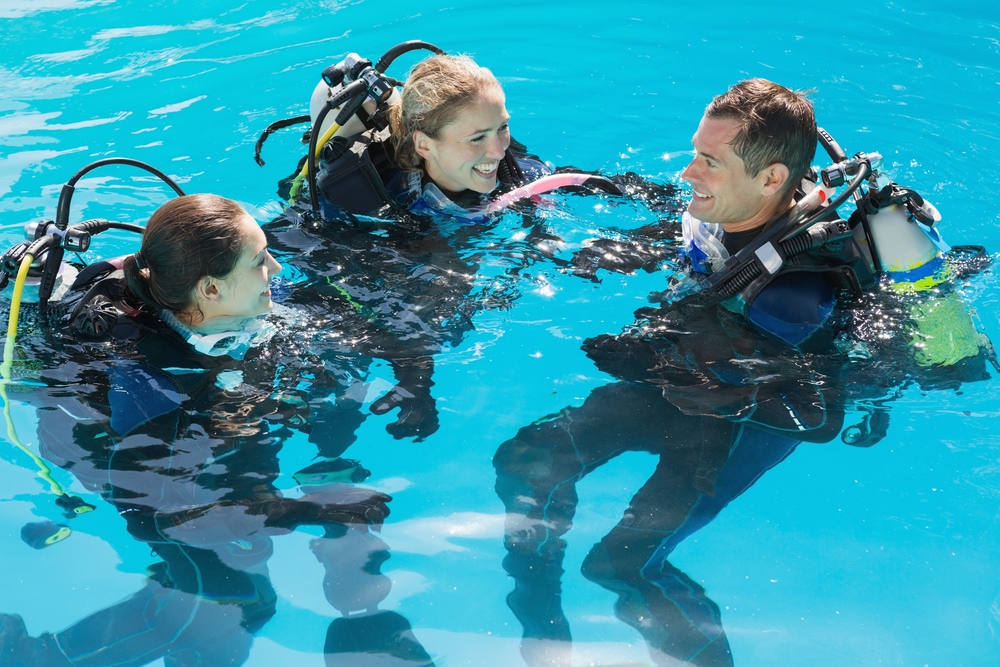
Here's how it typically works: you'll spend 30 to 60 minutes on land learning the basics — how your equipment works, how to equalize pressure in your ears, and a handful of simple hand signals. Then you'll head into confined water (a pool or calm, shallow bay) to practice breathing through the regulator and getting comfortable. Once your instructor is satisfied, you'll do an open-water dive, usually to a depth of about 30 to 40 feet, for around 30 to 45 minutes.
If you enjoy it and want to dive independently, that's when certification (like PADI Open Water or SSI Open Water Diver) comes into play — but you don't need it to get started.
What It Actually Feels Like
The most common question from first-timers is some variation of "will I panic?" The honest answer: it feels strange for the first minute or two. Breathing through a regulator is different — the air is dry, and you have to breathe slowly and deliberately through your mouth. But your body adapts fast.
Buoyancy is the other adjustment. You're essentially weightless, which is incredible once you relax into it but can feel disorienting at first. Your instructor will help you dial in your buoyancy so you're not floating up or sinking down — just hovering, neutrally buoyant, drifting along the reef.
The underwater world is quieter than you'd expect. You'll hear your own breathing, the occasional crackle of snapping shrimp on the reef, and not much else. Most people describe it as deeply calming once the initial novelty wears off.
How to Choose a Good Dive Operator
Not all dive shops are created equal, and for your first dive, the instructor makes all the difference. A few things to look for:
Small group sizes. Ideally no more than two or three students per instructor. Some shops will take groups of six or eight — you'll get less attention and less time underwater.
Well-maintained equipment. Regulators, BCDs (buoyancy control devices), and wetsuits should look and feel clean, not cracked or sun-bleached. Don't be shy about asking when gear was last serviced.
Patience. A good instructor reads your comfort level and adjusts the pace accordingly. If you feel rushed through the briefing or pushed into the water before you're ready, that's a red flag.
Certifications. Look for shops affiliated with PADI, SSI, NAUI, or SDI. These are the major international training organizations, and affiliation means the shop meets baseline safety and insurance standards.
What to Bring (and What's Provided)
The dive shop will provide all the scuba equipment — tank, regulator, BCD, wetsuit, mask, fins, and weights. You typically just need to show up with a swimsuit, a towel, and sunscreen (reef-safe, of course).
A few extras that help: if you wear contact lenses, bring a spare pair in case water leaks into your mask. If you're prone to motion sickness, consider taking a non-drowsy remedy beforehand — surface intervals on a rocking boat can catch people off guard. And bring a waterproof phone case or camera if you want to capture the experience, though many shops offer photo or video packages.
A Few Things to Know Before You Get in the Water
Equalize early and often. As you descend, increasing water pressure pushes on your eardrums. To relieve it, pinch your nose through the mask and gently blow — you'll feel a small pop. Do this every few feet on the way down. If it hurts, stop descending and signal your instructor.
Never hold your breath. This is the single most important rule in scuba diving. As you ascend, air in your lungs expands. If you hold your breath, it can cause serious injury. Breathe continuously — slow, relaxed breaths in and out.
Stay close to your instructor. Your job on a first dive is simple: breathe, equalize, and follow your guide. They'll handle navigation, depth monitoring, and pointing out the cool stuff.
Go slow. The instinct is to kick hard and swim fast, but that burns through your air supply and scares away marine life. The less you move, the more you see. Slow, gentle fin kicks are all you need.
Where to Do Your First Dive
The best beginner dive sites share a few traits: warm water, good visibility, calm conditions, and shallow reefs with plenty of marine life. Some of the most popular spots worldwide include Maui and the Big Island in Hawaii, Cozumel in Mexico, the Florida Keys, Cairns on Australia's Great Barrier Reef, and most of the Caribbean islands.
That said, great introductory dives happen everywhere from Thailand to the Mediterranean to the Red Sea. Warm water isn't strictly necessary — plenty of people do their first dive in a drysuit in colder destinations — but it does make the experience more comfortable.
What Happens After Your First Dive
If you catch the bug (and most people do), the next step is an Open Water certification course. It typically takes three to four days and includes classroom learning, pool sessions, and four open-water dives. Once certified, you can dive independently at sites around the world, rent equipment, and join dive boats without an instructor hovering over you.
But even before certification, your first dive will change the way you see the ocean. Snorkeling shows you the surface of the reef; scuba diving lets you step inside it.
Identify What You See Underwater
One of the best parts of diving is the marine life — and one of the most common frustrations is surfacing and not knowing what you just saw. That's where iSea comes in. Snap a photo of any fish, coral, or invertebrate, and our AI will identify the species in seconds. It works just as well with underwater camera photos reviewed after a dive as it does with live snorkeling shots.
Take iSea on your first dive
AI-powered marine life identification — free to download.